Thursday, May 30, 2024

Jamie Thiessen Shares Some Parting Words

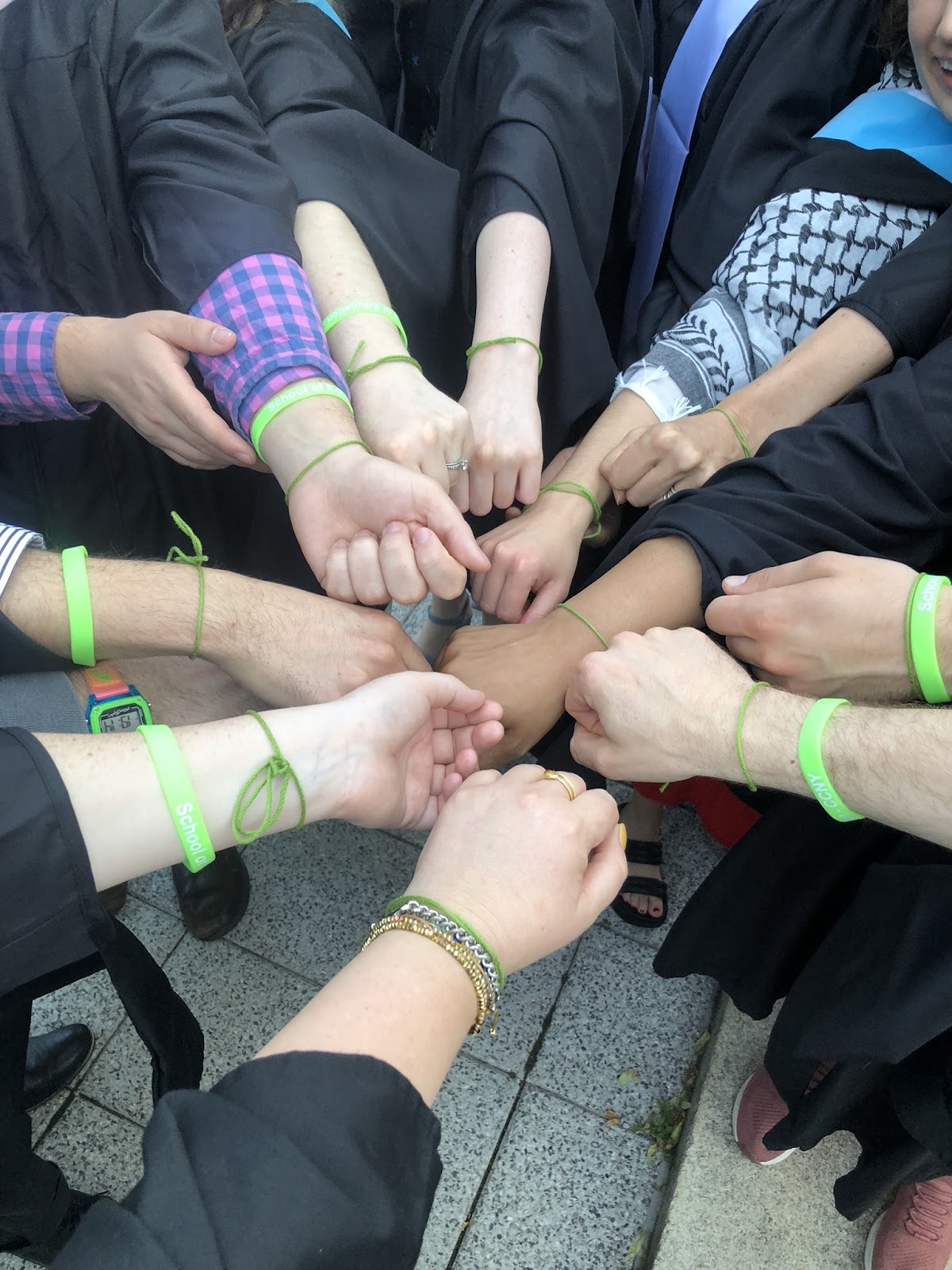
Graduation season is upon us! And as I reflect on my time in the program, it is hard to imagine a more life-changing experience than the Educational Theatre program at City College. 

Truthfully I almost didn’t apply, not just because teaching is hard, but because I knew that once I did start teaching I would be the only theatre teacher at my school, and possibly the only arts teacher too. It seemed like such a lonely career and I didn’t know if it would be worth spending all that time going back to school only to end up alone in my field. But when I looked around at the end of 2020, I had a baby to raise and a mortgage to pay, no covid vaccines available yet, no job, and no community nearby, so I took the leap. And I’m so grateful that I did, because what I found here in Ed Theatre, what my cohort and I created together, is a better community than I could have ever hoped for. Everyone in this program, from the students to the professors, is so generous with their time and their talents and expertise, and we have all grown so much together. I know that every person in this cohort is already a fantastic theatre teacher. Your students are, and will be, so lucky to have you.

As I reflect on how we’ve grown in this program and everything we’ve learned together, I’m struck by the ways our professors challenged us to rethink how education should look. From Sobha we learned about all the theatre practitioners who came before us, reminding us that we are not alone in this field, and she stressed the importance of de-centering whiteness and de-colonizing the curriculum so that our students of all backgrounds can see themselves reflected in theatre. From Jan we learned the importance of making our teaching practices accessible, and she challenged us to confront and unlearn how we think about disability and our students' access needs. From Elizabeth, we learned how to use the arts to teach literacy skills so we can proactively tackle the literacy crisis raging across the country. Elizabeth also took us on a deep dive into brain science in our curriculum class, and challenged us to be better at receiving feedback during student teaching.
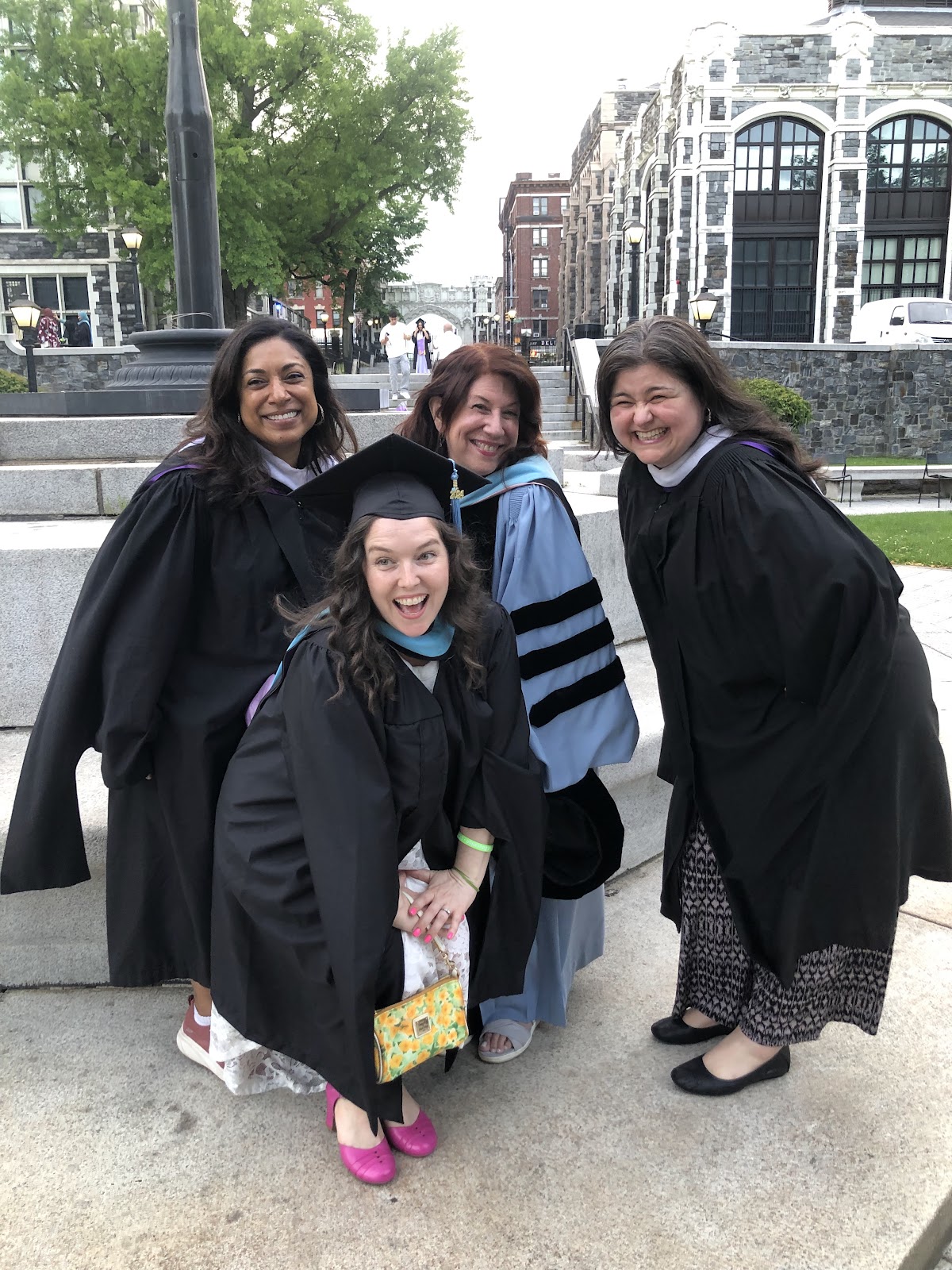
Sobha, Jan, and Elizabeth, thank you for your consistent commitment to our growth, and helping us build a community together; not a safe space, but a brave space. A space where we can take risks in the classroom, where we can share our failures, and learn from them, and a space to share our victories, no matter how small. 


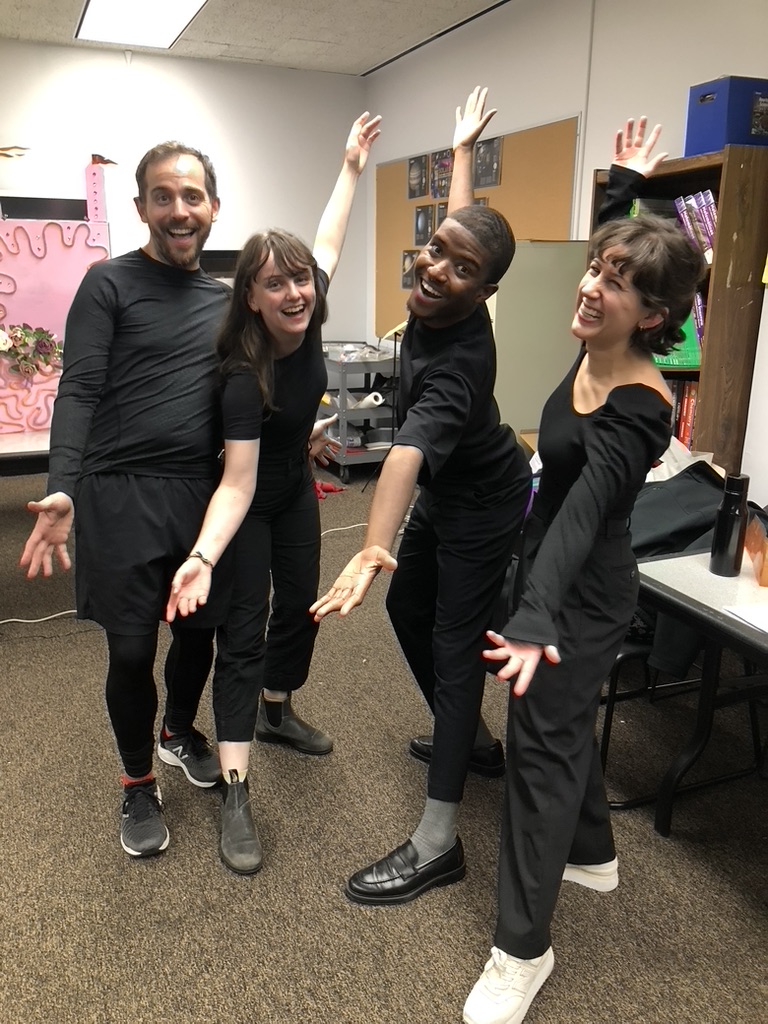
Our final year in the program we all collaborated to create our thesis in a class called Ethnodrama. The task was to choose a research topic, then pursue, research, question, write, conduct an field study, and ultimately take our findings and present the data as a piece of theatre; our Ethnodrama show. For those who couldn’t attended the performance, our research centered around the idea of Post-Truth, and we asked the question: how can we construct truth while living in a post-truth society? 


This year we spent together in Ethnodrama questioning everything we think we know and then somehow turning a year’s worth of academic papers into a theatrical presentation is an experience I will never forget and one that I will cherish forever.

We have all been through so much together. We’ve all seen our cohort experience loss and heartache beyond belief, and still come to class the following week to pick up where we left off. Because at the end of the day theatre isn’t just a hobby. It’s not just what we do or what we teach. It’s what we as a species need to survive. We are meaningmakers and storytellers, just like our ancestors before us. Our brains are constantly trying to make sense of the world around us and so we rely on art and theatre to understand what is happening in our world; to construct our truths even in a post-truth society. 

I want to thank each and every person in this cohort. The last 3½ years I’ve spent in this program have been immeasurably life-changing. I am a better person, a better teacher, and a better parent because of our time together. And as we go our separate ways and get jobs in different boroughs, I know that the WhatsApp chat we share will carry on, and bring our community with us into our next chapter. Thank you to our friends and family who supported us on this journey, thank you to City College for reopening campus so we could perform our Ethnodrama, thank you to my cohort for your endless creativity, thank you to our professors for leading the way to make all this possible. And to next year’s Ethnodrama class just remember: trust the process. 


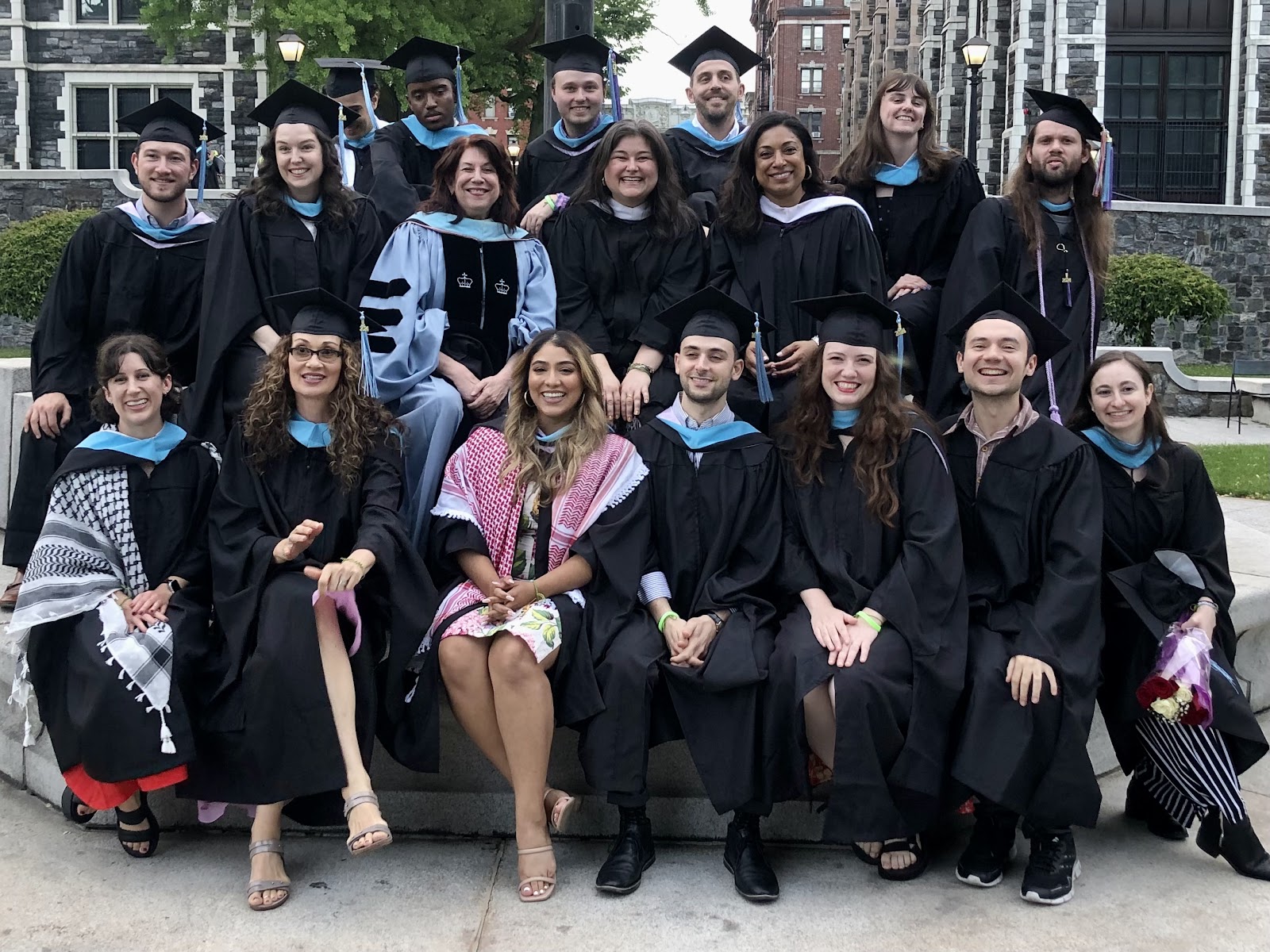
Congratulations to the Educational Theatre graduating class of 2024. We did it!
Thursday, April 4, 2024

Moses at The Met


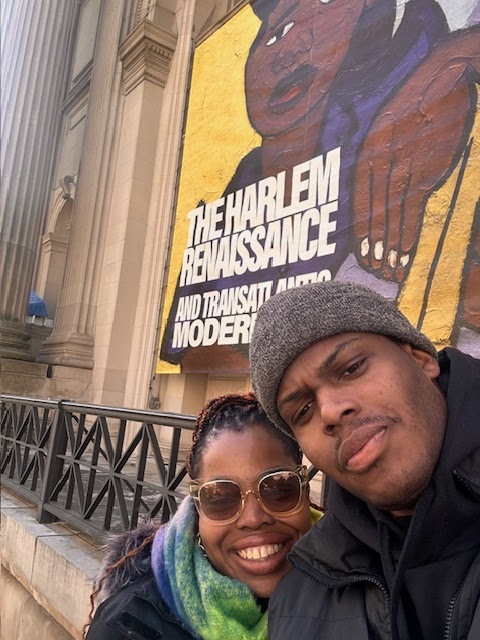
For one of my fieldwork assignments, I accompanied my brother, Moses, to The Harlem Renaissance and Transatlantic Modernism exhibition at the Metropolitan Museum of Art. Despite my being an artist in my family, my brother had never been exposed to art, let alone visited a gallery or museum. However, he graciously agreed to join me for this experience. I was thrilled at the opportunity to share the art, its history, and the stories embedded in each piece through the eyes of the artists with him. Leveraging my classroom learning, I found myself teaching him about art techniques, storytelling, and history.

As we explored the exhibition, he began to open up, sharing his opinions and engaging in discussions that prompted deeper contemplation of the artworks. I realized that everyone engages with art differently, and it's crucial not to restrict someone's access to it. 

Witnessing Moses' newfound curiosity for art, and his ability to express his understanding of color, light, and shadow, was immensely gratifying. His willingness to share even controversial opinions challenged me to think more critically about the art.

That day, I experienced a role reversal—I, the teacher, became the student. 

Moses taught me the importance of fostering critical thinking and curiosity in others. He reminded me of why I aspire to teach: to encourage students to question the world around them and to provide them with a safe space to share their thoughts without fear of judgment. Ultimately, Moses taught me that everyone has something valuable to contribute to the world, and we should not limit ourselves in that pursuit.


written by Rachel Georges who is currently a non-matriculated student taking classes in our program

Tuesday, March 5, 2024

Reflecting on Student Teaching and Translanguaging Pedagogy by Annika Gullahorn


    Though Claremont International High School is not my permanent Student Teaching placement, the high-quality instruction that I observed from CCNY alum Brigid Warnke warrants a blog post! I had the privilege of seeing literacy skills taught through theatre in multiple languages and expertly crafted scaffolding. Though I only spent four days at this school, I learned a great deal about how to support ELL students from Brigid and other Educators and saw so many beautiful examples of the deep culture of respect and community at this school. 


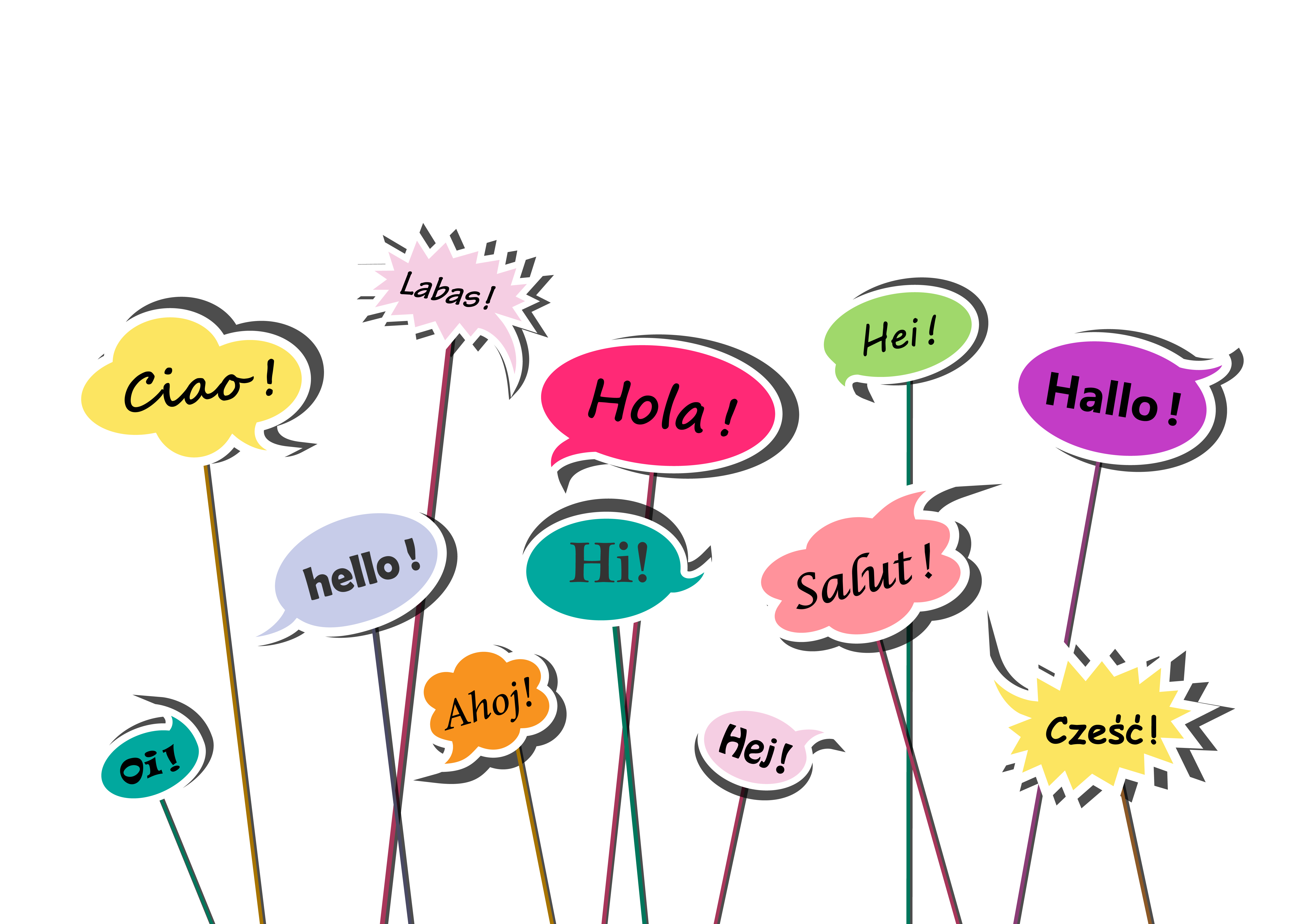
    A piece of language and a strategy I found to be highly effective came at the beginning of the first class I observed. Brigid placed the Outcome or the “S.W.B.A.T.” on the smart board: "I can think about a text using a variety of strategies.” Underneath the English version, the outcome was translated into French, Spanish, Vietnamese, and Arabic. After she read the outcome in English, she had students volunteer to read it out loud in their home language. This automatically showed me, an outside observer, that there was great respect for all languages spoken in the class. Also, this ensured that everyone knew what would happen in class. The main activity was using two strategies to annotate a scene from School Girls; Or, The African Mean Girls Play. Brigid had the students first practice the two strategies with provided sentence starters while watching a video of the scene, then they used the two strategies while reading the scene. This supported and validated multiple kinds of literacy (i.e., understanding body language or tone of voice very well) and provided a structured opportunity to practice the skill. Also, there were options for students to move ahead to the second scene, or more time was provided to keep reading in class the next day. 


    I am left with the question of how to effectively support students who struggle with literacy in their home language in a theatre setting. Most of the students I met in Brigid’s classes already had fairly strong literacy skills in their home language, so the students could successfully participate in class activities via Google Translate or Brigid explaining in French or Spanish. However, I wonder what strategies and supports would benefit students for whom that is not the case.


    A key takeaway from observing this lesson taught multiple times is that learning a skill takes time, and it is important to provide ample time in class for students to wrestle with the idea or skill. It is also essential to provide opportunities to practice in multiple modalities. I am learning that 15 different things do not need to happen in a lesson for it to be successful. Simplicity and a clear focus are also extremely valuable.


Tuesday, November 7, 2023

Understanding by Design (UbD) and Differentiated Instruction (DI) in Theatre Classrooms by Amadou Bah

The integration of Understanding by Design (UbD) and Differentiated Instruction (DI) in theatre classrooms holds great promise for learners. These combined principles can offer a range of benefits, particularly in the creative and dynamic setting of a theatre class.

One significant advantage is the potential for enhanced understanding. UbD encourages educators to identify essential questions and key ideas, while DI allows for personalized instruction. This combination enables students to engage deeply with the subject matter. In theatre, where nuance and context play a vital role, this deeper understanding can lead to richer performances and a more profound appreciation of the art form.

Personalized learning is another crucial aspect. In a theatre class, students come from diverse backgrounds with varying levels of experience and different learning styles. DI recognizes these differences and tailors instruction to meet individual needs, fostering a more inclusive and engaging learning environment. This personalization can be especially important in the arts, where creativity and self-expression flourish when students can learn in ways that suit them best.

Moreover, UbD and DI can transform assessment strategies. UbD's focus on authentic assessment pairs well with DI's approach to varied formative and summative assessments. This synergy results in a more comprehensive evaluation of students' progress. In a theatre classroom, where performances are a central aspect of assessment, this approach can ensure that students are evaluated based on their real-world skills and abilities, preparing them for future artistic endeavors.

Additionally, equity in education is a critical benefit. Theatre, as an art form, should be accessible to all, regardless of background or abilities. DI ensures that each student has the opportunity to engage and excel in the arts, creating a more diverse and representative theatre community.


In my future theatre class curriculum design, I intend to apply UbD and DI by establishing clear learning objectives aligned with essential questions and key ideas. I will incorporate diverse assessment strategies, allowing students to demonstrate their understanding through various means, such as performances, written reflections, or peer assessments. Differentiated instruction will be central to my teaching approach, recognizing and accommodating students' varying levels of readiness, interests, and learning profiles. Creating an inclusive environment will be a priority, providing accommodations for diverse learners and fostering a supportive and respectful atmosphere. I will also encourage regular reflection, empowering students to take ownership of their learning and set personal goals.

By combining UbD and DI in my theatre class curriculum design, I aim to create a rich and inclusive learning experience that enables students to develop a deep appreciation for the arts and equips them with valuable skills for life. Theatre, with its capacity to inspire creativity, empathy, and self-expression, can become a powerful tool for education when guided by these principles.


Wednesday, August 2, 2023

Reflection by Brendan Leonard


I made this video as a final reflection on my first course for grad school, "Teaching Literacy through the Arts" taught by Elizabeth Dunn-Ruiz. 

The class was done remotely, so for each session I Zoomed in from my desk at the Library for the Performing Arts after hours. 

I was inspired by the stacks of plays behind my desk when thinking about why I’m excited to teach literacy. 

Reading has given me my life in so many ways. I can’t wait to return the favor. 

Tuesday, March 28, 2023

Don't Be Quiet


By Irene Rising

At the start of my second year of grad school, after a number of pep talks from Sobha and encouragement from my classmates, I knew it was time for me to start teaching. Everything was falling into place: I was going to be a substitute teacher in the NYC DOE and work as a teaching assistant with an organization that brings teaching artists to schools in the five boroughs of New York. As a TA I was placed in two schools, one in the Bronx and one in Brooklyn. On my first day in Brooklyn, the lead teaching artist began the lesson to our 4th and 5th graders while I passed around materials. One child asked me a question as I approached him. Within two seconds of hearing my voice, his jaw dropped to the floor, he looked at his laughing friend next to him, pointed at me, and loudly exclaimed, “Oh my GOD… is that a MAN???” 


I’m a transgender woman. I’ve been living my truth as a woman publicly for over five years now, and I’m no stranger to prejudice and being ostracized for my identity. I battled with misgendering, microaggressions, and a range of harassment when my social transition began while working at one of NYC’s oldest steakhouses. I’ve had traumatic incidents on trains and was mugged (in no small part because of my visible transness). But more than anything, the daily microaggressions were what used to break me. What cisgender folks may not understand is that being misgendered, deadnamed, or called out for being trans, especially in public, is triggering. Every time. It reminds me that I am different; that I am not understandable and difficult to comprehend. It isolates me. And after years of becoming the woman I am today, where I am impacted by these microaggressions far less, I find myself faced with this 4th grader’s cruelty and I am broken once again. 


Without getting into my entire story, things are easier for me now regarding my social transition. I am fortunate enough to be generally seen and accepted as a woman; the visibility of my transness has gone down from my appearance alone. The thing that “reveals” that I am trans is my deeper voice. Before the pandemic, I took vocal feminization lessons and gained the skills to speak in ways that are more “feminine” (whatever that even means). But in the last couple of years, I realized that I actually like the voice I have. The training produced one that sounds phony, like someone else. So I have come to a place in my life where I don’t mind using my natural voice, even if that means that people question my gender when I speak. I had reached a healthy and solid acceptance of this. Until I started teaching last fall.


“Children just have no filter.”

“They just say what they see.”

“Don’t let it upset you, they’re just kids who don’t know better.”


These statements do not make me feel better. In fact, they validate the comments the child made. They bring me back to the trauma of my initial transition. My thoughts spiral: 

  • Even after all these years of transition, you are seen by everyone you encounter as trans (or, to put it as violently as the child, as “a man”).

  • If children have no filter but adults do, this means that every adult you meet knows you are trans but just doesn’t blurt it out at you. But on the inside, everyone has the same reaction as the kid.

  • Being trans distracts from anything else you have to offer. This kid wasn’t listening to your instructions as a teacher, he only cares about your gender.


These negative thoughts would be fueled further by the encounters I had with other children in the next few weeks. 


When I told my therapist about this encounter with the fourth grader, her advice was to “use that moment to educate [kids] about trans people. They can learn from you.”  I take issue with this. It is not my job to put myself in a potentially unsafe position by disclosing or confirming that I am, in fact, trans. Furthermore, I am not paid even a percentage of what it would require for me to go through the emotional labor of explaining what “trans” is to a classroom or school, and then face all the backlash that could come from parents and administration. The fact is, I am there to teach the material in the lesson plan. I am not there to go from classroom to classroom teaching “Trans 101” to every kid who triggers me. Does that sound like a helpful thing to do while actively triggered to you?


I could talk about every child last fall who asked me if I was “a boy or a girl” or a “man” or “why did I have a man’s voice” in front of the entire classroom, or about leaving a placement mid-day after sobbing in the principal’s office, but I am too exhausted. I wish I could conclude this by saying I have healed from these experiences and continue to teach kids, or that I found the way to do that and take care of my soul. But the truth is, I haven’t. I didn’t re-apply when my fall contract was up and I am not taking any sub jobs right now. I ultimately want to work with universities and teach adults in non-traditional settings, so working with kids is not necessarily required experience for my future practice.

By Irene Rising

What I can say is that I have deeply connected with teachers in this program who have taught me that cruelty from children is often targeted toward any adult, for any reason. I found genuine comfort in that sad sort of solidarity. I have grown closer to folks in my cohort who have given me tons of support as I struggled through those difficult experiences. I cherish these strong educators and see them all as invincible warriors. My dear friend and mentor Laura Bozzone recently told me, “You have so many important gifts to share with your voice. Don’t be quiet.”  I have carried her words very close to me since. 


To clarify, I still love teaching adults and am passionate about bringing the arts to students in a variety of settings. I am, of course, still a fierce advocate for arts programming for all youth, and am unwavering in my love for all children, even the ones that hurt me. I do not place anger on any specific child, but on our society that still does not understand and recognize trans people as just people. A trans teacher is in the classroom to teach, not to be interrogated about being trans. The same can be said for teachers who are subjected to racist, sexist, homophobic, fatphobic and xenophobic questioning from students and staff. 


With Laura’s words close to my chest, I quietly vow to myself to not be quiet anytime soon. I just may not pick up any sub shifts for the rest of the school year.


Thursday, May 19, 2022

A Narrative Reflection on Fieldwork - Literacy and The Arts by Simon MacLean

In thinking about the role of language and comprehension as it relates to my fieldwork, I want to start with a comment I heard last week hosted by the American Indian Law Program titled: Language Rights are Human Rights: Participating in the International Decade of Indigenous Languages. In the meeting an elected official reflected on how fundamental language differences impacted the lives of Indigenous Americans as they interacted with colonial Europeans. He specifically noted that European people have central to their language the subject and predicate, while the Shawnee people have the verb central to their language. The argument he goes on to make is that if language is an example of how we think and process, how can two different languages and cultures agree on say a Treaty? Does the Treaty, as written and signed, mean the same thing to the Europeans as it does to the Shawnee? His argument is no, it can’t possibly have the same meaning. While he stopped his argument here, my understanding is that the assumption made by the Europeans writing the Treaty was that the language was very clear, X means X, Y means Y. But what if you are saying X and Y is the message that is heard? 

Extrapolating from this idea, it made me wonder: do I make the assumption that an audience, in either a theatrical production or a classroom setting, will fundamentally understand what is being said because the audience has chosen to be there? And even further, do we speak the same language, both literally and culturally? I saw both American Utopia and SIX on Broadway this spring. Both were delightful shows, are joyous, fun, and a bit rambunctious. They were essentially concerts that wove story through the music. In both locations, the demographic was primarily white, with SIX containing a much younger crowd than American Utopia’s predominantly middle age plus theatre goers. At both events there was a lot of singing along, it was clear who had spent 10’s and 100’s of hours listening again and again to the music of David Byrne (I am one of them) or the SIX soundtrack (my daughter Bea).


As I think about Byrne’s music: am I predisposed to relate to his lyrics because I ‘speak’ the same language as him: have a similar background, upbringing, and cultural references? Do I relate to the emotionality of the music? And, oh brain hurts here, is emotionality in music cultural too, i.e. subjective, or is it a universal “truth” that all people relate to regardless of background? Certainly, many of the artists I know would argue the latter. I am not sure a clear answer matters, but I think the questions are important for artists to consider: who am I making this for? Will my audience be able to understand it, or am I using cultural shorthand which will make them confused? Am I accidentally creating work that only shares the language of certain people? Lastly, are there fundamental truths that bridge cultural boundaries, which can be relied on to ensure the art, music, and/or lesson land with the entire audience? 

Certainly, as educators, we need to be intentional: am I speaking a language that my students can understand? Does the material have a cultural connection to them or will it appear arbitrary or just plain confusing to them? Rabab Ghazoul, in a long conversation with Courtney J. Bodie, on the podcast Teaching Artistry makes the claim that she believes storytelling is innate. All humans have the desire to both hear and tell stories. It is here that we have an entry point for all students, regardless of background. It is here too she says that we can chip away at a colonized educational system by valuing the stories of all students in our room. It is also a way to connect to one another through a shared experience. It seems as if Rabab Ghazoul would support the notion that there are some “truths” that exist cross-culturally. We as humans care about stories and in that shared desire we can relate to one another’s experiences. 

Educator Mauricio Salgado, also in conversation with professor Bodie, notes that balancing power is central to decolonizing education. He says that ‘naming it alone, we begin to break the power down.’ Reflecting on the idea that language and cultural norms can impact how we hear, I wonder: how do we ensure that even in the naming of a thing, that the language being used actually conveys the idea you intend to? Salgado talks about how as a child he watched his immigrant parents do Theatre of the Oppressed and Immersive theatre within other immigrant communities of a shared background. His parents would perform and then interview the audience to promote dialogue on subjects like domestic violence or mistreatment by employers. He noted that the power of the story was seeing yourself on stage and then being asked about it. Also because both men and women were a part of the dialogue, many men could hear things spoken that they might have trouble or resistance to articulating themselves.  Salgado also noted that it is important to make art interactive and to relate to communities from differing backgrounds. Does his observation then answer Ghazoul’s question?  Yes, storytelling is universal, but the story needs to relate to the audience, to speak the language that relates to their culture. 

At the Face to Face Conference hosted by the Arts in Education Roundtable, I listened to artists talk about Sustaining Music, Dance, and Language in Himalayan and Colombian Culture. The artists expressed the need to have the subjects in schools, both to ensure that cultural heritage wasn’t lost and additionally to expose children with no cultural background in Himalayan or Colombian Culture to a rich musical and theatrical history. They appeared to rely on the language of dance and music as ideas that would connect the audience to the subject, all humans speak these languages, and therefore that is an entry point in the material. 

In a roundabout way, I think the fieldwork taught me to value in education the things that are important to me as a person. Storytelling, music, and dance are all venues for connecting students to a deep understanding, of themselves, their peers, the world around them, and the world beyond them. It is important to ask though, how does this story work for this audience? Stories might be universally appealing but not every story will appeal universally. Know your audience, respect their traditions and values and ensure that those are present in a given lesson.